
Last Updated: October 25, 2026
Quick Summary
Sensory friendly clothing for adults is apparel designed to reduce physical irritation and minimize sensory overload, using soft fabrics, flat seams, tagless construction, and gentle fasteners. The goal is a garment you can forget you're wearing. Check the label, turn the garment inside out, and feel the inside seams and collar before buying.
- The most common sensory triggers are itchy tags, rough textures, raised seams, tight waistbands, and metal fasteners.
- Look for tear-away, tagless, or printed labels to remove neck-tag irritation.
- Turn garments inside out and run your fingers along shoulder, side, and armhole seams.
- Size up if you are between sizes, since tightness is a trigger.
- Build your wardrobe one occasion at a time and test each piece at home.
Table of Contents
- What Makes Clothing Sensory Friendly for Adults
- Sensory Friendly Fabrics That Feel Good All Day
- Why Tagless Clothing for Adults Makes a Difference
- Seamless Clothing for Adults: Flat Seams and Smooth Construction
- Fasteners, Waistbands, and Fit: The Details That Decide Comfort
- How to Choose Sensory Friendly Clothing Brands
- Building a Sensory Friendly Wardrobe by Occasion and Season
- Start With One Piece That Feels Right
- Frequently Asked Questions
What Makes Clothing Sensory Friendly for Adults
Sensory friendly clothing for adults is apparel designed to reduce physical irritation and minimize sensory overload, using soft fabrics, flat seams, tagless construction, and gentle fasteners.
Sensory issues are not a childhood concern.
Below, we break down what causes discomfort and how to shop around it. Clothing that works versus clothing that fights you comes down to five details: fabric, tags, seams, fasteners, and fit.
Sensory Triggers to Check Before You Buy
The most common sensory triggers in clothing are itchy tags, rough fabric textures, raised seams, tight waistbands, and metal fasteners against the skin.
Rank your own triggers: some cannot tolerate a neck tag but barely notice a zipper, while others find compression calming and loose fabric chaotic.
Watch out: buying online without checking the return window is the most common mistake.
Sensory Friendly Fabrics That Feel Good All Day
Fabric is the first filter.
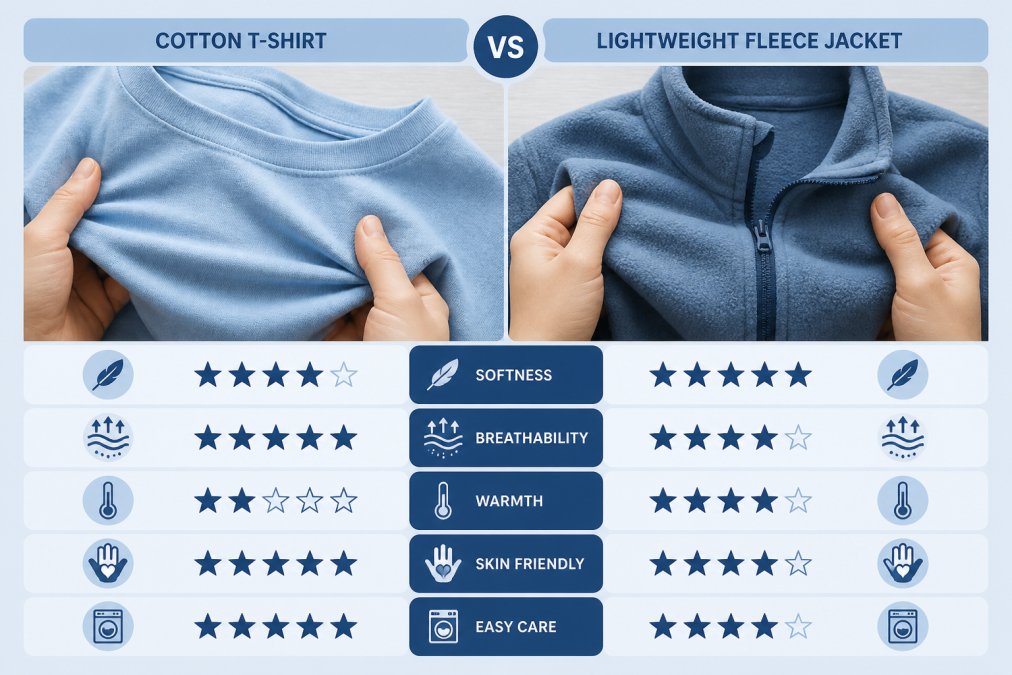
Texture is the second filter. Some find smooth jersey soothing; others prefer the gentle weight of fleece. Do not assume "soft" means "thin", a midweight fabric can feel calmer than a flimsy one that clings.
We look for fabrics that stay soft after washing, because a shirt that feels good on day one and rough on day ten is not sensory friendly at all. Our Unisex Softstyle T-Shirt is ring-spun cotton with a tear-away label, a good starting point for testing a softer baseline.

Why Tagless Clothing for Adults Makes a Difference
Tagless clothing for adults replaces the sewn-in neck label with a printed or tear-away label, removing one of the most reliable sources of daily irritation.
The fix is cheap: look for "tear-away," "tagless," or "printed label" in the product description. A sewn tag can often be removed with a seam ripper, though this risks a small hole.
The collar matters as much as the label.
Seamless Clothing for Adults: Flat Seams and Smooth Construction
Seamless clothing for adults uses flat seams or a seamless body design so stitching does not press or chafe against the skin.
When you shop, turn the item inside out and run your fingers along the shoulder, side, and armhole seams.
A crewneck sweatshirt with a seamless body is a practical example. Our Unisex Heavy Blend™ Crewneck Sweatshirt uses that construction, which reduces the friction points that make people tug at their clothes.

Fasteners, Waistbands, and Fit: The Details That Decide Comfort
Fasteners and fit decide whether a garment stays comfortable past the first hour. Zippers, buttons, and snaps add weight and metal against the skin. Waistbands dig in when you sit. A loose-fitting cut gives room to move without constant readjustment.
Here is how we would evaluate a piece before buying:
- Check whether fasteners sit away from bare skin
- Confirm the waistband is soft and not elastic-biting
- Look for an adjustable hem or drawcord for a personalized fit
Some people find compression clothing calming, while others find it restrictive. Neither is wrong. Test one piece at a time rather than overhauling your wardrobe at once.
How to Choose Sensory Friendly Clothing Brands
Most guides tell you to look for "soft fabrics" and "tagless labels" and stop there.
Here is the framework we use when evaluating any brand, including our own:
1. Trigger-to-garment mapping. A brand that understands sensory needs describes clothing by what it removes or reduces: tag-free necks, flat-lock seams, covered waistbands, weightless fasteners. If a page only says "ultra-soft" without telling you why, you are guessing. Look for "tear-away label," "flatlock stitching," "tagless neck print," "no side seams," and "encased elastic waistband", concrete mechanisms, not marketing adjectives.
2. Fabric specification, not just fiber name. "Cotton" covers everything from rough muslin to ring-spun jersey.
3. Seam and construction disclosure. Turn the garment inside out, literally or mentally.
4. Fastener and hardware honesty. Zippers, buttons, snaps, and rivets are not automatically bad, but they need thoughtful placement and finishing.
Women's Summit Fleece Full-Zip Jacket →
5. Sizing, stretch, and return policy. Fit is half the battle.
**6.
A quick comparison of what to look for versus what to skip:
| What a brand should disclose | What to be skeptical of |
|---|---|
| Fiber content and fabric weight | "Soft" with no fiber or weight |
| Label type (tear-away, printed, sewn) | No mention of labels at all |
| Seam construction (flatlock, bonded, taped) | Only outside product photos |
| Fastener placement and finish | Hardware shown only from the front |
| Real measurements and stretch notes | S/M/L with no numbers |
| Return window and process | Final sale or vague returns |
At Quietly Seen, we try to meet that standard because we design for people navigating mental health conditions, neurodivergence, and invisible disabilities. Our guide to mental health awareness hoodies walks through what to look for.
Building a Sensory Friendly Wardrobe by Occasion and Season
A sensory friendly wardrobe is not a single outfit, it is a set of reliable pieces you can reach for without thinking. The mistake most adults make is buying one "comfortable" item and expecting it to work everywhere. Work, sleep, exercise, formal events, and weather each demand different fabric, fit, and fasteners, so build by occasion first, then by season.
Work and Office Wear
Office environments mean structured fabrics, buttons, and long stretches of sitting. The sensory traps are waistbands that dig, collars that rub, and stiff fabrics that do not breathe. Look for:
- Soft-waist trousers or pull-on pants with encased elastic or a flat front and no metal hardware at the waist.
- Knit blazers or cardigans instead of structured wool blazers, stretch moves with you and reduces shoulder seam pressure.
- Tagless button-downs in cotton or cotton-blend poplin, with a fabric-backed button placket so buttons do not contact skin.
A practical test: sit in the garment for five minutes before removing tags. If the waistband rolls or the collar rides up, it will do the same at your desk.
Sleep and Loungewear
Sleep is where sensory sensitivity is most acute, because you lie on seams and fabric for hours. Priorities shift to softness against the skin, no hardware, and breathability. Look for:
- Seamless or flat-seam sleep shirts and pants, side seams are the usual culprit when you lie on your side.
- Printed or tear-away labels, or no label at all.
- Bamboo viscose or cotton jersey that wicks moisture; synthetic satin may feel smooth but can trap heat.
Exercise and Athletic Wear
Athletic wear is often recommended for sensory comfort because it uses flatlock seams, stretch fabrics, and tagless construction, but compression levels vary widely, and what feels calming to one adult feels restrictive to another. Look for:
- Flatlock or bonded seams in leggings and tops, these lie flat against the skin.
- Tagless neck labels and printed care labels rather than sewn tags.
- Four-way stretch fabrics with a soft hand feel; nylon-spandex blends are common but vary in smoothness.
If you are compression-sensitive, start with a relaxed-fit athletic tee and loose shorts before trying compression tights. If compression is calming, look for graduated compression pieces designed for daily wear, not just recovery.
Formal and Social Occasions
Formal wear is the hardest category for sensory-friendly shopping because traditional construction relies on structure, linings, and hardware. Prioritize the pieces closest to your skin and accept some compromise on outer layers. Look for:
- Soft, unstructured dresses or jumpsuits in jersey, crepe, or ponte knits that drape without stiff interfacing.
- Pull-on formal pants with a flat, covered waistband.
- Tagless blouses with covered buttons or a hidden placket.
Test formal pieces at home for at least an hour before the event, sitting, standing, and walking, because discomfort that is tolerable for five minutes becomes unbearable over an evening.
Hot and Cold Weather
Seasonal changes shift the sensory equation. In heat, the enemy is clamminess and clinging; in cold, it is bulk and static.
Warm weather: Lightweight cotton, linen, and bamboo breathe and dry quickly. Sleeveless cuts and loose fits reduce skin contact. Avoid heavy synthetic blends that trap sweat. A midweight cotton tee often feels calmer than a thin, clingy one.
Cold weather: Layer with midweight fleece or merino wool base layers that regulate temperature without bulk. Our Women's Summit Fleece Full-Zip Jacket is a midweight 100% polyester microfleece layer with an adjustable drawcord hem, useful for adults who want warmth they can adjust rather than a fixed, bulky coat.

A Trigger-Based Shopping Shortcut
If you are short on time, shop by your primary trigger rather than by occasion:
| If your main trigger is... | Start with... | Avoid... |
|---|---|---|
| Tags at the neck | Tear-away or printed-label tees | Sewn-in brand labels |
| Seams | Seamless or flatlock construction | Raised side seams and shoulder seams |
| Waistbands | Pull-on pants with covered elastic | Metal buttons and tight elastic |
| Fabric texture | Ring-spun cotton, bamboo jersey, microfleece | Rough wool blends, stiff poplin |
| Heat and sweat | Lightweight cotton or linen, loose fit | Heavy synthetics, tight layers |
| Pressure | Compression or snug base layers (if calming) | Loose, chaotic fabrics (if pressure is calming) |
Build one occasion at a time, test each piece at home, and keep a simple note of what worked. For extra inspiration, browse gift ideas for neurodivergent adults to round out your choices. Over a few months, you will have a wardrobe that requires almost no mental effort, which is the real goal.
Start With One Piece That Feels Right
The fastest way to build a sensory friendly wardrobe is to change one piece at a time and notice what your body tells you.
That is the standard we hold ourselves to at Quietly Seen. Our clothing is designed as gentle, everyday reminders that you are not alone, made with details like tear-away labels and seamless construction that respect how you actually feel in your clothes.
Get started with Quietly Seen and build a wardrobe that feels as kind as it looks.
Frequently Asked Questions
What makes clothing sensory friendly for adults?
Sensory friendly clothing for adults removes the details that cause irritation: itchy tags, raised seams, stiff fasteners, and rough fabric. Look for soft natural fibers or smooth blends, flat or minimal seams, tagless neck labels, and loose or classic fits that do not press on the body. The goal is low-stimulation clothing that you can wear for hours without noticing it.
What fabrics are best for adults with sensory sensitivities?
Cotton, linen, and bamboo are common choices because they breathe and feel soft against skin. Ring-spun cotton is smoother than standard cotton, and lightweight jersey works well for everyday wear. Some adults prefer smooth polyester microfleece for outer layers because it resists pilling and stays soft. Test a small piece first, since fabric texture is personal and what feels fine to one person can bother another.
How can I find clothes without irritating tags or seams?
Check the product description for tagless or tear-away labels and seamless or flat-seam construction before you buy. On Quietly Seen's Softstyle T-Shirt, for example, the label is pearlized and tear-away, and the body has no side seams. If you already own a piece with an itchy tag, cut it out carefully rather than pulling it, and wash new items once to soften the fabric.
Are there sensory friendly clothing brands for adults?
Yes, though many adaptive collections focus on children. When comparing sensory friendly clothing brands, check the fabric content, seam construction, label type, and return policy rather than relying on marketing language. Quietly Seen offers adult pieces like the Unisex Softstyle T-Shirt at $34.99 and the Heavy Blend Crewneck Sweatshirt from $29.78, both with tear-away labels and soft construction suited to everyday wear.
What should I look for when shopping for sensory-friendly clothes online?
Read the fabric weight and content, look for tagless or tear-away labels, and check whether seams are flat or minimal. Confirm the fit is classic or loose rather than slim, and review the return policy in case the texture does not work for you. Ordering one piece before committing to a full wardrobe limits the risk, and washing it once before wearing gives you a truer sense of how it feels.
